
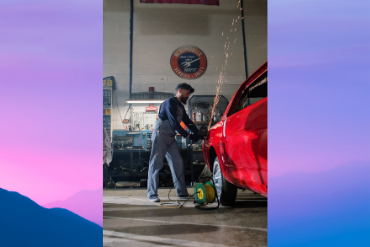
1. Course Information for Auto Denter
Course Title: Professional Auto Denter
Duration: 3 Months (12 Weeks)
Course Type:
- Classroom Theory: 20%
- Practical Workshop: 25%
- On-the-Job Training (OJT): 55%
Course Fee: ৳25,000/=
Total Training Hours: 360 Hours
- Classroom Theory: 60 Hours
- Practical Workshop: 80 Hours
- On-the-Job Training (OJT): 160 Hours
- Driving Skills (T+P+O): 20 Hours
- Computer and Digital Skills (T+P+O): 20 Hours
- English Communication Skills (T+P): 20 Hours
Training Level: Beginner to Professional Auto Denter
Target Group:
- School Leavers
- Job Seekers
- Apprentice Denters
- Entry-Level Auto Denter
- Workshop Technicians
- Fleet Maintenance Personnel
- Automotive Enthusiasts
- Career Changers
- Entrepreneurs
- Overseas Employment Candidates
Entry Requirement:
- Minimum Class VIII/SSC (Preferred) & Above
- Physically fit for workshop activities
Job Opportunity (Home & Abroad):
- Government Organization
- Semi-Government Organization
- NGO
- Autonomous Organization
- Private Organization
- Corporate Organization
- Authorized automobile dealerships
- Independent automotive workshops
- Fleet maintenance companies
- Transport and logistics organizations
- Manufacturing industries
- Automotive training institutes
- Automobile spare parts and service companies
- Self-employment/ Entrepreneurship
2. Course Objective of Auto Denter
Upon completing this course, trainees will be able to:
- Identify vehicle body construction and materials.
- Repair minor and major dents using conventional and Paintless Dent Repair (PDR) techniques.
- Restore damaged body panels to manufacturer specifications.
- Use body repair tools, measuring equipment, welding equipment, and dent-pulling systems safely.
- Understand body alignment, corrosion protection, and repair quality standards.
- Safely drive customer vehicles for inspection, positioning, and quality checks.
- Use computers for repair estimation, documentation, inventory management, and digital learning.
- Communicate professionally in English with customers, insurance companies, and international employers.
- Apply occupational health, safety, and environmental practices in accordance with international automotive standards.
3. Training Modules of Auto Denter
There are several training modules. Such as-
- Orientation
- Workshop safety
- 18 Automobile Systems
- Basic Automotive Technology
- Vehicle Body Construction & Materials
- Hand Tools, Power Tools & Measuring Equipment
- Dent Repair Techniques
- Welding & Metal Repair
- Panel Replacement & Alignment
- Surface Preparation & Corrosion Protection
- Quality Inspection & Estimation
- Hybrid & Electric Vehicle Technology
- Driving Skills
- Computer and Digital Skills
- English Communication Skills
- Workshop Management & Entrepreneurship
4. Training Module Content Details
| Sl# | Content | Type | Duration | Docs | Video | |
| 1 | Orientation | Theory | 0.5 | |||
| 2 | Course Overview | Theory | 0.5 | |||
| 3 | History of Automobiles | Theory | 2 | |||
| 4 | Worldwide Automobile Makers | Theory | 2.5 | |||
| 5 | Workshop Safety | Theory | 0.5 | |||
| 6 | Workshop Safety | Practical | 2 | |||
| 7 | Perform First Aid Practice | Theory | 1 | |||
| 8 | Perform First Aid Practice | Practical | 2 | |||
| 9 | 18 Automobile Systems | Theory | 2 | |||
| 10 | 18 Automobile Systems | Practical | 3 | |||
| 11 | 18 Automobile Systems | OJT | 6 | |||
| 12 | Basic Automotive Technology | Theory | 2 | |||
| 13 | Basic Automotive Technology | Practical | 3 | |||
| 14 | Basic Automotive Technology | OJT | 6 | |||
| 15 | Vehicle Body Construction & Materials | Theory | 2 | |||
| 16 | Vehicle Body Construction & Materials | Practical | 4 | |||
| 17 | Vehicle Body Construction & Materials | OJT | 7 | |||
| 18 | Hand Tools, Power Tools & Measuring Equipment | Theory | 2 | |||
| 19 | Hand Tools, Power Tools & Measuring Equipment | Practical | 4 | |||
| 20 | Hand Tools, Power Tools & Measuring Equipment | OJT | 7 | |||
| 21 | Dent Repair Techniques | Theory | 2 | |||
| 22 | Dent Repair Techniques | Practical | 8 | |||
| 23 | Dent Repair Techniques | OJT | 20 | |||
| 24 | Welding & Metal Repair | Theory | 10 | |||
| 25 | Welding & Metal Repair | Practical | 20 | |||
| 26 | Welding & Metal Repair | OJT | 32 | |||
| 27 | Panel Replacement & Alignment | Theory | 10 | |||
| 28 | Panel Replacement & Alignment | Practical | 20 | |||
| 29 | Panel Replacement & Alignment | OJT | 40 | |||
| 30 | Surface Preparation & Corrosion Protection | Theory | 2 | |||
| 31 | Surface Preparation & Corrosion Protection | Practical | 5 | |||
| 32 | Surface Preparation & Corrosion Protection | OJT | 8 | |||
| 33 | Quality Inspection & Estimation | Theory | 2 | |||
| 34 | Quality Inspection & Estimation | Practical | 5 | |||
| 35 | Quality Inspection & Estimation | OJT | 8 | |||
| 36 | Hybrid and EV Technology | Theory | 2 | |||
| 37 | Hybrid and EV Technology | Practical | 3 | |||
| 38 | Hybrid and EV Technology | OJT | 6 | |||
| 39 | What is the meaning of GLI, XLI? | Theory | 0.5 | |||
| 40 | Defensive driving principles | Theory | 1 | |||
| 41 | Defensive driving principles | Practical | 10 | |||
| 42 | 10 Principles of Safety Driving | Theory | 1 | |||
| 43 | 10 Principles of Safety Driving | Practical | 1 | |||
| 44 | Tools list during driving | Theory | 0.5 | |||
| 45 | Familiar with maintenance items | Theory | 1 | |||
| 46 | Various Warning Lights in Dashboard | Theory | 1 | |||
| 47 | Various Warning Lights in Dashboard | Practical | 2 | |||
| 48 | Familiar with road traffic signage | Theory | 1 | |||
| 49 | Factors affected fuel economy | Theory | 0.5 | |||
| 50 | Cause of vehicles catching fire | Theory | 0.5 | |||
| 51 | Be aware about distracted driving | Theory | 0.5 | |||
| 52 | Computer fundamentals | Theory | 1 | |||
| 53 | Microsoft Word | Theory | 3 | |||
| 54 | Microsoft Excel | Theory | 3 | |||
| 55 | PowerPoint | Theory | 3 | |||
| 56 | Email communication | Theory | 1 | |||
| 57 | Cloud storage | Theory | 0.5 | |||
| 58 | Internet research | Theory | 0.5 | |||
| 59 | Cybersecurity basics | Theory | 0.5 | |||
| 60 | Workshop management software | Theory | 1 | |||
| 61 | Digital customer records | Theory | 0.5 | |||
| 62 | Preparing job cards | Practical | 1 | |||
| 63 | Creating quotations | Practical | 1 | |||
| 64 | Writing service reports | Practical | 1 | |||
| 65 | Maintaining inventory | Practical | 1 | |||
| 66 | Online spare parts search | Practical | 1 | |||
| 67 | Accessing manufacturer service manuals | Practical | 0.5 | |||
| 68 | Using digital inspection checklists | Practical | 0.5 | |||
| Speaking | ||||||
| 69 | Greetings | Theory | 0.5 | |||
| 70 | Customer reception | Theory | 0.5 | |||
| 71 | Telephone communication | Theory | 0.5 | |||
| 72 | Appointment scheduling | Theory | 1 | |||
| 73 | Explaining repairs | Theory | 1 | |||
| 74 | Giving estimates | Theory | 1 | |||
| 75 | Handling complaints | Theory | 1 | |||
| 76 | 1000 Automotive English Vocabulary | Theory | 1 | |||
| 77 | 2000 Business Communication Words | Theory | 1.5 | |||
| 78 | 1000 Automotive Abbreviations | Theory | 1 | |||
| 79 | 500 professional meeting conversation words | Theory | 1 | |||
| 80 | 300 Common English Phrases, Replies and Expression | Theory | 1 | |||
| 81 | 500 Daily Spoken English Questions & Answers | Theory | 1 | |||
| Reading | ||||||
| 82 | Repair manuals | Theory | 0.5 | |||
| 83 | Wiring diagrams | Theory | 0.5 | |||
| 84 | Collision Damage Manual | Theory | 0.5 | |||
| 85 | Parts catalogues | Theory | 0.5 | |||
| 86 | Owner’s Manual | Theory | 0.5 | |||
| Writing | ||||||
| 87 | Service reports | Theory | 0.5 | |||
| 88 | Emails | Theory | 1 | |||
| 89 | Quotations | Theory | 1 | |||
| 90 | Job cards | Theory | 1 | |||
| 91 | Inspection reports | Theory | 0.5 | |||
| Listening | ||||||
| 92 | Customer conversations | Theory | 0.5 | |||
| 93 | Technical videos | Theory | 0.5 | |||
| 94 | International workshop communication | Theory | 0.5 | |||
| Workshop Management & Entrepreneurship | ||||||
| 95 | Opening an automobile workshop | Theory | 1 | |||
| 96 | Customer management | Theory | 1.5 | |||
| 97 | Inventory control | Theory | 0.5 | |||
| 98 | Spare parts management | Theory | 2 | |||
| 99 | Pricing strategy | Theory | 1 | |||
| 100 | Marketing | Theory | 1 | |||
| 101 | Social media promotion | Theory | 2 | |||
| 102 | Financial management | Theory | 0.5 | |||
| 103 | Tax basics | Theory | 0.5 | |||
| 104 | Business ethics | Theory | 0.5 | |||
| 105 | Service Menu | Theory | 5 | |||
| 106 | Periodic Maintenance Check Sheet | Theory | 2 | |||
| 107 | Diagnosis Check Sheet | Theory | 2 | |||
| 108 | Quality Control Check Sheet | Theory | 2 | |||
| 109 | 10 Principles of Auto Technician | Theory | 3 | |||
| 110 | Job Description of Auto Denter | Theory | 3 | |||
| 111 | 5S Methodology | Theory | 5.5 | |||
| 112 | KAIZEN | Theory | 3 | |||
| 113 | Office Manner | Theory | 1.5 | |||
| Total | 360 | |||||
5. Assessment Scheme
- Theory Examination: 25%
- Practical Skills Test: 35%
- Attendance:5%
- Continuous Assessment: 5%
- Workshop Performance: 10%
- OJT Evaluation: 10%
- Driving Skills Assessment: 5%
- Computer Skills Assessment: 2.5%
- English Communication Assessment:2.5%
- Total: 100%
Note: A minimum overall score of 70% is recommended for certification.
6. Soft Skills Development
Throughout the course, trainees should develop:
- Communication and presentation skills
- Professional ethics
- Time management
- Teamwork
- Leadership
- Critical thinking
- Problem-solving
- Customer service excellence
- Quality assurance
- Workplace discipline
- Continuous learning mindset
- Adaptability to new automotive technologies
- Analytical troubleshooting
7. Required Training Resources
I. Workshop Resources
- Body hammers and dollies
- Slide hammers
- Glue puller kits
- Paintless Dent Repair (PDR) tools
- Stud welder and dent puller
- MIG welder
- Spot welder
- Hydraulic body repair equipment
- Body measuring system
- Panel alignment gauges
- Air compressor
- Pneumatic tools
- Grinders and sanders
- Safety equipment (PPE)
- Digital measuring tools
- Laptop or desktop computers
- Repair estimation software
- Digital cameras/tablets for damage documentation
- Training vehicles with different body damage scenarios
II. Computer Resources
- Desktop/laptop computers
- Dealer Management System (DMS)
- Enterprise Resource Planning (ERP) software
- Microsoft Office
- Internet access
- Printers and scanners
III. Training Facilities
- Multimedia classroom
- Projector and smart board
- Meeting room for role-play
- Library of workshop manuals
- Simulation lab for workflow planning
8. Graduate Competencies
Graduates who complete this curriculum will be able to:
- Inspect vehicle body damage and prepare professional repair plans.
- Repair minor and major dents using conventional and Paintless Dent Repair (PDR) techniques.
- Replace and align damaged body panels according to manufacturer specifications.
- Perform basic welding and metal repair while maintaining structural integrity.
- Protect repaired areas from corrosion and prepare surfaces for refinishing.
- Operate body repair tools, measuring equipment, and digital estimation software safely and efficiently.
- Drive and position customer vehicles safely for inspection, repair, and quality control.
- Prepare digital repair estimates, reports, invoices, and inventory records using computer applications.
- Communicate confidently in English with customers, insurers, suppliers, and international employers.
- Apply international standards of occupational safety, environmental protection, quality assurance, and customer service, enabling employment in dealerships, collision repair centers, fleet maintenance facilities, or successful self-employment.