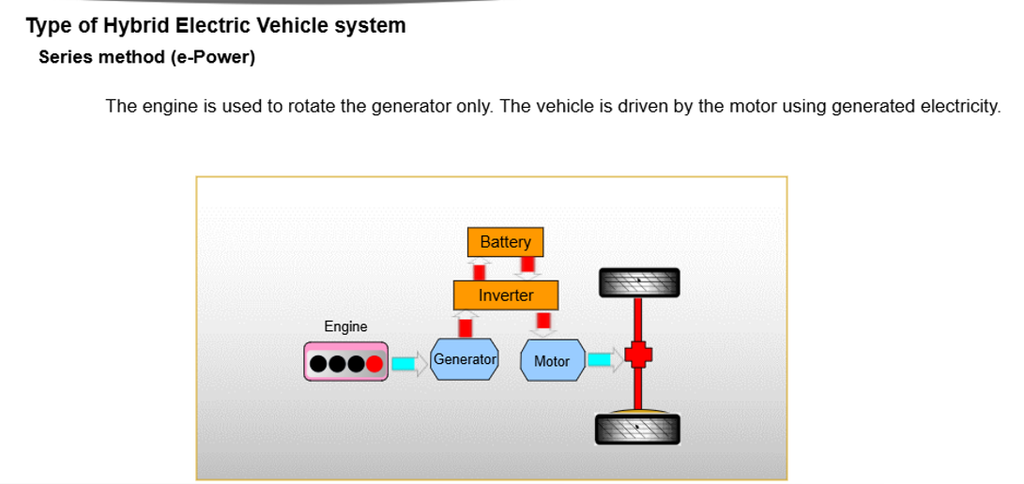
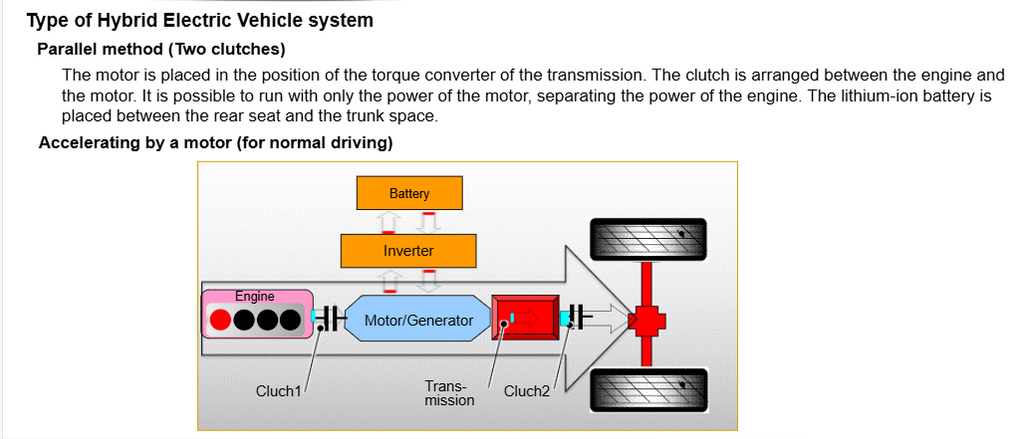
A Hybrid Electric Vehicle (HEV) uses two main sources of propulsion: an internal combustion engine (ICE) and one or more electric motors powered by a high-voltage battery. The vehicle’s control system automatically decides when to use the engine, electric motor, or both to achieve good performance and fuel efficiency.
Main Components for a Hybrid Electric Vehicle
- Internal Combustion Engine (ICE) – Produces mechanical power using gasoline or diesel.
- High-Voltage Battery – Stores electrical energy for the electric motor.
- Electric Motor/Generator – Drives the vehicle and can also generate electricity.
- Inverter/Power Control Unit – Converts and controls electrical power between the battery and motor.
- DC-DC Converter – Converts high-voltage DC to lower voltage for the 12-V electrical system.
- Transmission/Power-Split Device – Transfers and manages power from the engine and motor to the wheels, depending on hybrid design.
- Regenerative Braking System – Recovers kinetic energy during deceleration and converts it into electrical energy.
- Hybrid Control Unit (HCU) – Coordinates engine, motor, battery, transmission, and regenerative braking operation.
- 12-V Battery – Supplies power to conventional electrical equipment and helps operate vehicle control systems.
- Fuel Tank – Stores fuel for the internal combustion engine.
How an HEV Works
1. Vehicle Start-Up
When the driver switches the vehicle ON, the hybrid control system checks battery condition, engine requirements, and other operating conditions. In many HEVs, the engine remains OFF initially,y and the vehicle’s electrical systems are powered by the battery/DC-DC system.
2. Low-Speed / Light-Load Driving
At low speeds and light loads, the electric motor may drive the wheels, while the gasoline engine remains OFF. This reduces fuel consumption and emissions.
3. Normal Acceleration
When more power is required, the engine starts and works together with the electric motor. The motor provides additional torque, helping the engine accelerate the vehicle efficiently.
4. High-Speed / Cruising
During steady cruising, the engine generally provides most of the required power. Depending on the hybrid architecture and operating conditions, the engine may also drive a generator to produce electricity for the battery or motor.
5. Regenerative Braking
When the driver releases the accelerator or applies the brakes, the electric motor operates as a generator. It converts part of the vehicle’s kinetic energy into electrical energy and sends it back to the high-voltage battery.
6. Battery Charging
Unlike a conventional vehicle, an HEV can recharge its high-voltage battery through regenerative braking and engine-driven generation. A conventional non-plug-in HEV normally does not need to be connected to an external charger.
7. Engine Stop at Standstill
When the vehicle stops at a traffic signal or in traffic, the engine can automatically shut OFF when conditions permit. The hybrid system restarts it when propulsion power is required.
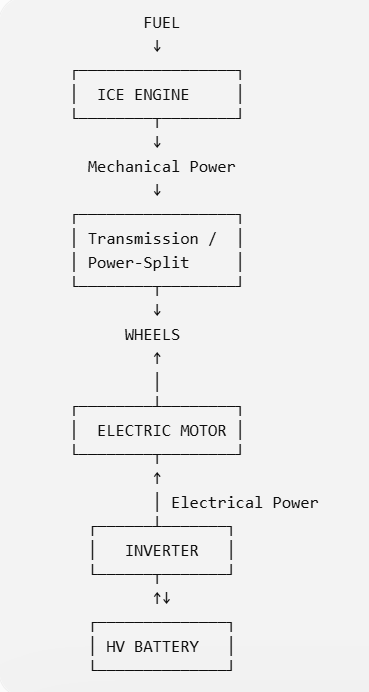
Simple Energy Flow
Regenerative Braking Energy Flow
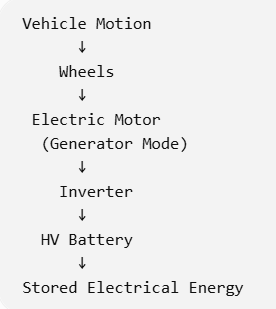
The Complete HEV Energy Cycle
Fuel → Engine → Mechanical Power → Wheels
and
HV Battery → Inverter → Electric Motor → Wheels
During braking:
Wheels → Electric Motor/Generator → Inverter → HV Battery
In Simple Words
An HEV combines an engine with an electric motor. The engine is mainly used when sustained or higher power is needed, while the electric motor assists during starting and acceleration and can sometimes propel the vehicle by itself. During braking, the motor becomes a generator and recovers energy that would otherwise be lost as heat, storing it in the high-voltage battery for later use.
Overall principle:
Engine + Electric Motor + Intelligent Power Control + Regenerative Braking = Improved Fuel Efficiency and Reduced Emissions
Note: The exact power flow differs between series, parallel, power-split, and plug-in hybrid systems.
Category of Hybrid System
- Series Method (e-Power)
- Series/Parallel Method
- Parallel Method
- Parallel Method (Two Clutches)